Before Vision Boards, Put Your Future into Words
Put a future into words before building a vision board: a short writing routine helps clarify what you hope to experience and what images should express.
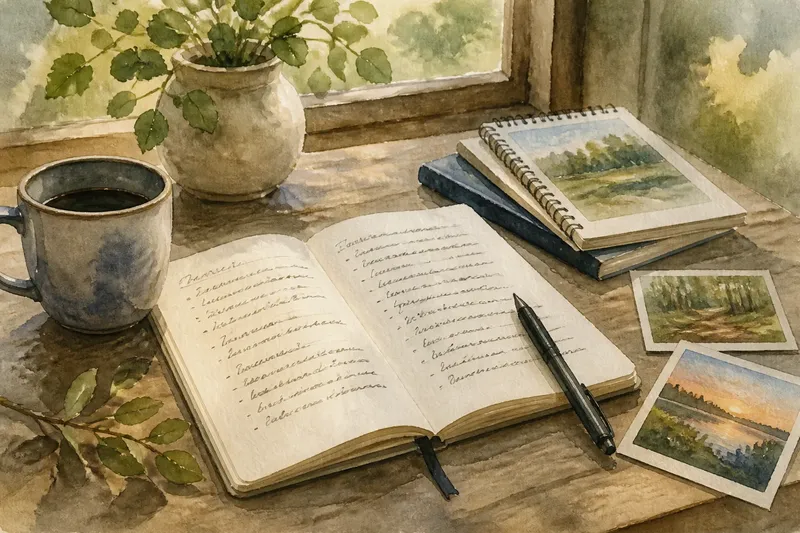
Before you search for pictures of cabins, crowded dinner tables, or sunlit desks, try putting your future into words. A short writing routine can clarify what you hope your life will feel like and give any later vision board a purpose beyond collecting attractive images.
Written aims are not predictions or contracts. They are working descriptions: language for a direction you want to explore, clear enough to guide choices but open enough to change as circumstances do.
Start with lived details
Begin with an ordinary moment rather than a grand description of success. Imagine a weekday in a future that feels more like yours: What are you doing before work? Who do you speak with? What part of the day feels unhurried, useful, or connected?
Concrete details help distinguish a real preference from a borrowed image. “A successful life” could mean recognition, security, creative freedom, or time with people you love. A sentence such as “I have an evening without work messages, and I cook with someone I care about” gives you something specific to examine.
Write freely for a few minutes without editing. If you get stuck, use prompts such as these:
- What do I want more room for?
- What would I like an ordinary day to contain?
- What do I hope to learn, make, or contribute?
- Which responsibilities do I want to carry differently?
- What would I be relieved to stop treating as essential?
These are invitations, not targets you must fulfill. A wish can be valuable even if it remains uncertain, and noticing that uncertainty is part of clarifying it.
Turn wishes into sentences
Read what you wrote and underline phrases that feel personally meaningful. Look for descriptions of experience, not just objects or outcomes. “A garden” might point to hands-on work, quiet, food, or a place to welcome friends; the underlying meaning may matter more than owning a particular kind of home.
Now turn a few underlined ideas into present-tense statements. For instance: “I make time for patient creative work,” or “My home makes it easy to gather people.” Present tense can make an aim feel vivid, but it does not claim that the aim is already true. Use “I hope to” or “I want to” if that feels more honest.
Keep each statement broad enough to survive a change in route. “I want to feel useful through work that solves tangible problems” leaves room for different jobs or projects. “I will become a manager at a particular company” names one path, which may be useful later as a plan but is too narrow to describe the hoped-for direction.
A week of writing
Give the writing a modest rhythm over one week. Use a notebook, a notes app such as Apple Notes, or a document you can revisit; choose whichever makes it easy to return without turning the exercise into a design project.
- Day one: Write about an ordinary day you would welcome. Include people, pace, surroundings, and the work or care that occupies your attention.
- Day two: List what you want more of and less of. Name experiences, such as quiet concentration or shared meals, rather than assuming you need a specific purchase or achievement.
- Day three: Mark the phrases that feel like yours. Put a question mark beside anything that sounds impressive but does not feel convincing.
- Day four: Draft three to five personal aims in plain language. Keep them separate from deadlines, budgets, and instructions for getting there.
- Day five: Read the aims aloud. Replace abstract words with ordinary details, and remove any sentence that depends mainly on someone else’s approval.
- Day six: Let the draft rest. Do something unrelated, then return to it with fresh attention.
- Day seven: Keep the sentences that still feel useful, revise the ones that have shifted, and note what remains unresolved.
The week is a container for reflection, not a test of commitment. If a day gets crowded, resume when you can; a missed writing session does not invalidate the ideas you have gathered.
Separate direction from plan
A personal aim describes the kind of experience or direction you value. A plan names actions, timing, and resources. “I want work that leaves energy for family” is an aim; “I will ask my supervisor about adjusting my schedule” is one possible action that could serve it.
Keeping the two apart protects the aim from becoming attached to its first solution. A move, job change, or purchase might help, but it is not automatically the point. Ask what the proposed action is meant to make possible, then check whether another route could meet the same need.
Say you write, “I want to make things with my hands and share them with others.” You later realize that renting a studio is not practical right now. You could explore a community ceramics class or reserve a corner of the kitchen for small sewing projects; the observable result would be regular time spent making and a chance to share the work, without treating a studio as the only valid outcome.
Before choosing images?
How long should a written aim be?
One clear sentence is often enough to begin, with a few lines of context if the meaning could be misunderstood. Add detail that helps you recognize the hoped-for experience, not detail that locks you into a single route.
What if my aims contradict each other?
Contradiction may reveal a genuine tension, such as wanting both quiet and frequent company. Write both aims down, then describe the conditions under which each matters most; you do not have to force a permanent winner.
Should I write about outcomes I cannot control?
You can name a hope involving other people or uncertain circumstances, but distinguish the hope from your own choices. For example, wanting a close friendship is different from deciding to make time for conversation and show interest in someone’s life.
When should I add pictures?
Add images once you can say what a picture would represent. A photograph of a crowded table might stand for belonging rather than entertaining, and that distinction can help you choose images that reflect your meaning instead of a polished lifestyle scene.
Choose images with meaning
When you are ready to make a vision board, treat each image as a prompt for a written aim. Put the sentence beside the picture, or keep a short caption list in a notebook. If you cannot explain why an image belongs, leave it out for now.
Images can make an aim easier to remember, but they can also smuggle in assumptions about status, appearance, or what a good life is supposed to look like. A picture of a spacious house may represent privacy, room to create, or a place to host; write down the meaning you intend rather than relying on the image to speak for itself.
Keep the written version somewhere you can revisit without needing to preserve the board exactly as it is. As work, relationships, health, or responsibilities change, an aim may need new wording. Returning to the sentence lets you ask whether the direction still matters, even if the picture or route no longer fits.
Before collecting more visuals, read your aims and choose one sentence that still feels alive. The next useful question is not “How do I make this happen exactly as pictured?” but “What small choice would let me experience a little more of this direction now?”